
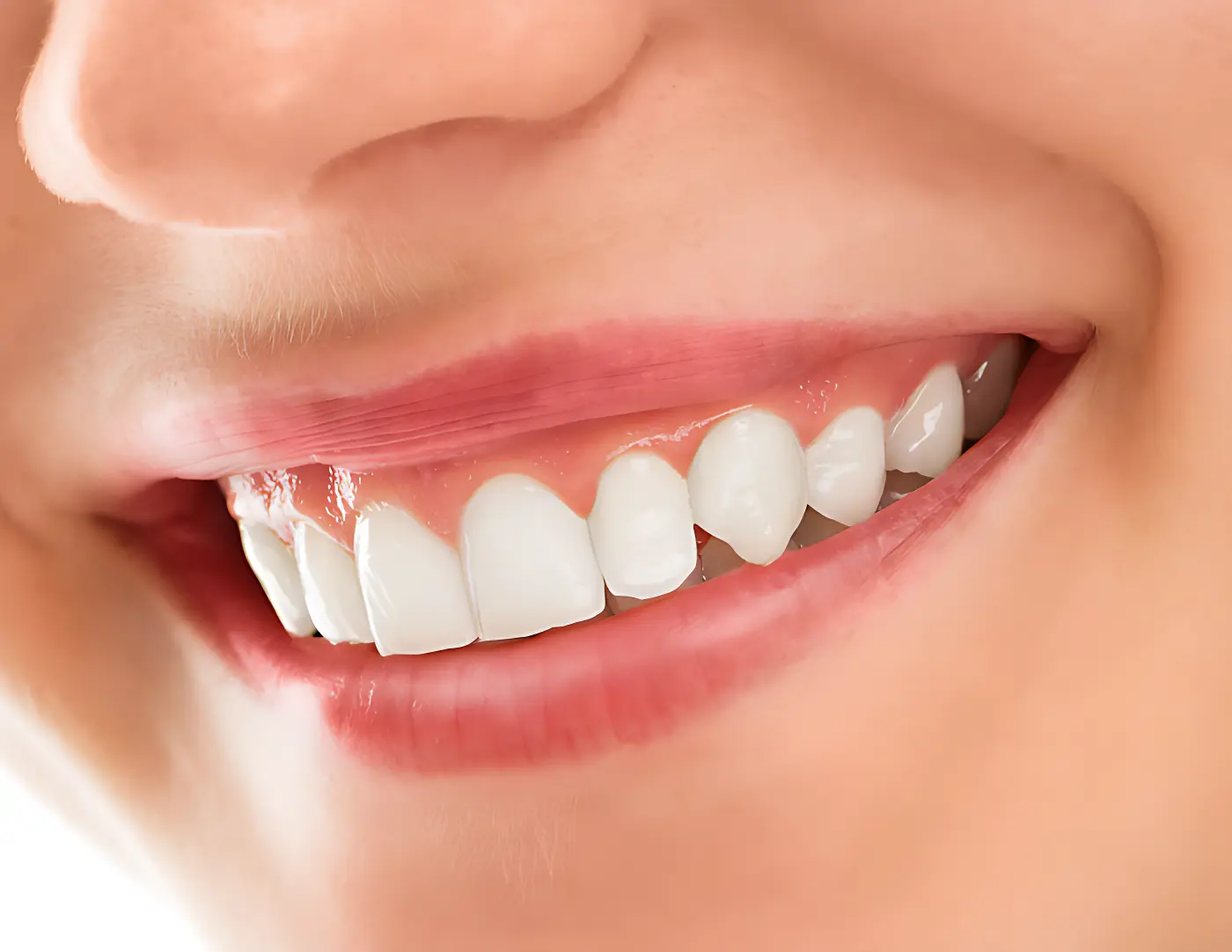
Gum aesthetics (periodontal plastic surgery) is an aesthetic dental approach applied in cases where the gums are overly visible during a smile, teeth give a short impression, and the gumline is uneven. The goal is not just to reduce the gum tissue, but to create a more balanced smile by evaluating the teeth, gums, and lip line together.
Table of Contents
OpenSome patients feel that their gums are too visible when they smile, that their teeth appear shorter than they actually are, or that their smile line is asymmetrical. This condition may be related to excess gum tissue, an uneven gum contour, lip movement, or the visible portion of the teeth.
During gum aesthetics, approaches such as gum contouring, gingivoplasty, gingivectomy, and gummy smile correction can be discussed. Which method is appropriate can only be determined after a clinical examination by a dentist.
What is Gum Aesthetics?
Gum aesthetics is a group of cosmetic dental procedures aimed at improving the shape, level, and symmetry of the gumline. This approach can help teeth look longer, more balanced, and better suited to the smile. During planning, gum health, tooth shape, and the lip line are all considered together.
Gums act like the frame of a smile. Even if teeth are healthy and white, if the gumline is uneven or if the gums are too visible when smiling, the smile may not look fully balanced. Therefore, in aesthetic dentistry, the shape of the gums is just as important as the color, size, and alignment of the teeth.
Gum aesthetics is mostly considered in the following cases:
- If the gums are overly visible when smiling;
- If the teeth give a short impression;
- If the gumline is uneven;
- If the gum around one tooth looks different from the others;
- If there is a gummy smile appearance;
- If the gumline needs to be aligned before veneers or a smile design;
- If there is excess gum tissue;
- If the patient desires a more symmetrical appearance in their smile.
This procedure is not performed the same way for every patient. In some cases, simple gum contouring is sufficient. In other cases, gingivoplasty, gingivectomy, orthodontic treatment, or other aesthetic approaches may be planned together.
Who is Suitable for Gum Aesthetics?
Gum aesthetics is most suitable for patients whose gums show too much when they smile, whose teeth appear short, or whose gumline is uneven. However, gum health must be checked before the procedure. If there is bleeding, inflammation, or periodontitis, these problems must be treated first.
Sometimes, a patient only sees the "my teeth are short" problem in the mirror. In reality, the teeth may be of normal length, but excess gum tissue is covering a part of the tooth. In such cases, gum contouring or a gingivectomy can be discussed.
Other times, the problem lies not in the gums, but in the upper lip rising too high during a smile or in the jaw structure. Therefore, the first step for gum aesthetics is a proper examination and clarifying the underlying cause.
What is a Gummy Smile and Why Does It Occur?
A gummy smile is a condition where the gums are visible more than normal during a smile. The patient usually describes this as "my gums show too much when I smile." The cause may not only be excess gum tissue; lip movement, the visible length of the teeth, and the jaw structure can also influence it.
From a medical standpoint, a gummy smile is not always considered a disease. However, if it causes aesthetic concern, the patient may start hiding their smile, keeping their mouth closed when taking pictures, and avoiding laughing freely. In such cases, gummy smile correction can be discussed.
For instance, a patient might be aesthetically bothered by seeing more than a few millimeters of gum tissue when smiling. However, the reason behind this appearance could be related to excess gum tissue, lip hypermobility, or jaw structure. Consequently, gummy smile correction is not carried out identically for every patient.
The causes of a gummy smile can vary:
- Excess gum tissue;
- Teeth appearing short;
- Teeth not being fully visible;
- The upper lip rising too high during a smile;
- Upper jaw structure;
- An uneven gumline;
- The shape and size of the teeth;
- In some cases, bite and teeth alignment differences.
Gum aesthetics can be the primary solution only when the cause is related to the gum tissue itself. If the cause is lip movement or jaw structure, the approach will differ.
Is a Gummy Smile Always Related to the Gums?
No, a gummy smile is not always solely related to the gums. Sometimes excess gum tissue, sometimes the lip rising too high when laughing, and sometimes jaw and tooth proportions influence it. Therefore, gum aesthetics should not be considered the only solution for every gummy smile case.
This point is very critical. This is because patients sometimes think, "let me just get my gums trimmed and it will be fixed." But if the cause is lip movement, gum contouring alone may not deliver the expected result.
For gummy smile correction, the doctor must first evaluate how much gum tissue is visible during a smile, the shape of the teeth, the lip line, and the health of the gums. In some cases, photo analysis is also helpful for planning.
How is Gum Contouring Performed?
Gum contouring is the reshaping of excess or uneven gum tissue to make the gumline look more balanced. Prior to the procedure, the doctor checks gum health, symmetry, the visible length of the teeth, and the patient's smile line. Gum aesthetics should be carried out after this planning phase.
Although gum contouring may seem like a minor change, it can have a significant impact on the overall appearance of the smile. Removing too much or reshaping too little gum tissue can ruin the outcome. Thus, planning is more vital than the procedure itself.
In practice, sometimes correcting the gumline around just 1 or 2 teeth is enough. Other times, a contour is planned across all front teeth. This difference depends on the patient's smile line, the shape of the teeth, and the amount of gum tissue.
Gum contouring is typically performed in the following stages:
- Initial examination
- Checking gum health
- Evaluating the smile line
- Measuring the visible length of the teeth
- Preparing the contour plan
- Local anesthesia when necessary
- Shaping the gumline
- Explaining post-operative care instructions
- Follow-up examination
If there is gum inflammation, bleeding, or tartar before the procedure, these issues must be resolved first. Performing aesthetic contouring on unhealthy gums is not the correct approach.
What is the Difference Between Laser and Surgical Methods?
Laser and surgical methods are different approaches that can be utilized in gum contouring. In some cases, the laser can help shape the tissue in a more controlled manner. The surgical method, on the other hand, may be chosen based on the thickness of the tissue, bone level, and the scope of the procedure.
There is no single answer to the question "Which method is better?". For some patients, a laser is suitable; for others, a classic surgical approach may be more appropriate. The key issue here is not the name of the technology, but the correct planning carried out by the dentist.
During gum aesthetics, the dentist looks at these factors:
- The thickness of the gum tissue;
- The amount of excess tissue;
- The visible length of the teeth;
- The bone level;
- The presence of bleeding and inflammation;
- The patient's healing potential;
- How many teeth the procedure covers.
A laser can provide comfort, but it should not be marketed as a "magic method" that solves every problem. A proper decision is made only after a clinical examination.
What is Gingivoplasty?
Gingivoplasty is an aesthetic procedure performed to reshape the contours of the gums. The goal here is to bring the gumline into a more symmetrical form that harmonizes with the smile. In a gum aesthetics plan, gingivoplasty is mostly preferred when the gum shape is uneven.
In simple terms, gingivoplasty means giving shape to the gums. In some patients, the gum appears lower on one tooth and higher on another. This creates an uneven look in the smile.
Gingivoplasty can be discussed in these scenarios:
- If the gumline is uneven;
- If one tooth appears shorter than another;
- If symmetry is disrupted in the smile;
- If the gum contour does not look aesthetic;
- If the gumline needs to be harmonized before a smile design.
Gum health must be checked before this procedure. If the gums are bleeding, inflamed, or if there is tartar buildup, gum treatment must be performed first.
What is Gingivectomy?
Gingivectomy is a procedure performed to remove excess gum tissue. This approach can be selected when gum tissue covers a part of the teeth, when teeth appear short, or when gummy smile correction is required. The decision should be made after an examination by a dentist.
Gingivectomy is sometimes searched by the public as "gum cutting." However, this phrase oversimplifies the procedure. In reality, the doctor does not just remove excess tissue here; they also consider the future shape of the gumline.
In a gum aesthetics plan, gingivectomy comes to the forefront mostly in cases involving excess tissue. The main issue here is not how much tissue is removed, but preserving the harmony between the visible part of the tooth and the gumline.
Gingivectomy can be discussed in the following cases:
- If there is excess gum tissue;
- If the teeth look short;
- If a gummy smile is related to an overabundance of gum;
- If the gumline is not symmetrical;
- If it is necessary to increase the visible part of the tooth;
- In some cases, if tissue removal is required within a periodontal treatment plan.
This procedure is not suitable for everyone. If too much gum tissue is removed, problems like sensitivity, aesthetic discrepancy, or exposure of the tooth root can occur. Therefore, measurement and planning are highly important.
What is the Difference Between Gingivoplasty and Gingivectomy?
Gingivoplasty is mainly performed to correct the shape of the gums and make the smile line more symmetrical. Gingivectomy, however, focuses on removing excess gum tissue. In a gum aesthetics plan, these two approaches can sometimes be applied together.
| Procedure | ||
|---|---|---|
| Gingivoplasty | To correct gum shape and contour | Uneven gumline, symmetry issues |
| Gingivectomy | To remove excess gum tissue | Teeth appearing short, gummy smile, excess tissue |
| Gum contouring | To bring the gumline into an aesthetic shape | Minor and moderate aesthetic corrections |
| Gummy smile correction | To reduce gum visibility during a smile | Using different methods depending on the cause |
The most important question for the patient is not "which procedure is better?". The core question is: is the problem in the shape of the gum, excess tissue, lip movement, or the visible length of the teeth?
How is Gummy Smile Correction Selected?
Gummy smile correction is selected based on the root cause of the problem. If the gum tissue is excessive, gum contouring, gingivoplasty, or gingivectomy can be considered. If the cause is lip movement or jaw structure, gum aesthetics alone may not be sufficient.
Not every gummy smile is identical. Two patients might show the exact same amount of gum when smiling, but the cause could be completely different. In one, excess gum tissue might play the primary role, while in the other, lip movement could be the main factor.
For gummy smile correction, the dentist must check these aspects:
- How much gum tissue is visible during a smile;
- What the visible length of the teeth is;
- Whether the gumline is symmetrical;
- How the upper lip moves during a smile;
- Whether there is inflammation or bleeding in the gums;
- Whether the jaw and tooth proportions are appropriate;
- Whether the patient's expectations are realistic.
Gum aesthetics is just one option here. In some cases, Botox, orthodontic treatment, smile design, or other approaches may also be discussed.
When is Botox Appropriate, and When is Gum Aesthetics Better?
Botox can be considered mainly in gummy smile cases related to the upper lip rising excessively high during a smile. Gum aesthetics, however, may be more appropriate when there is excess gum tissue, short-looking teeth, and an uneven gumline.
| Condition | |
|---|---|
| Excess gum tissue | Gum contouring, gingivoplasty, gingivectomy |
| Upper lip rises too high | Botox or other lip-oriented approaches |
| Teeth appear short | Gum aesthetics, sometimes smile design |
| Gumline is uneven | Gingivoplasty and contouring |
| Jaw structure influences it | Additional orthodontic or surgical evaluation |
Botox provides a temporary effect and is not suitable for every patient. Gum aesthetics can provide a more permanent aesthetic change for tissue-related causes. But here, too, the outcome depends on the patient's anatomy, gum health, and the dentist's planning.
Who is Not Suitable for Gum Aesthetics?
Gum aesthetics should not be performed immediately in patients with active gum inflammation, bleeding, periodontitis, poor oral hygiene, or uncontrolled systemic health problems. Gum health must be restored first, followed by aesthetic planning.
Although this is an aesthetic procedure, the gum is a living tissue. Shaping unhealthy tissue may not yield a correct result. Inflamed gums may bleed more, healing can be delayed, and the contour may shift later on.
Gum aesthetics can be postponed in these situations:
- If there is gum bleeding;
- If active gingivitis or periodontitis is present;
- If there is a lot of tartar and plaque buildup;
- If the patient does not follow oral hygiene practices;
- If there is uncontrolled diabetes or other high-risk conditions;
- If a non-urgent aesthetic intervention is planned during pregnancy;
- If the patient's expectations are not realistic.
In these cases, it is not about rejecting the procedure, but choosing the right sequence. Treating the gums first and then performing gum aesthetics is a much healthier approach.
How is the Recovery After the Procedure?
Recovery after gum aesthetics varies according to the scope of the procedure, the method used, and the patient's oral hygiene. There may be sensitivity, mild bleeding, swelling, and discomfort for a few days. Adhering to the care rules provided by the doctor significantly impacts the healing process.
After minor contouring, patients can return to their daily lives much faster. In more extensive gingivectomies or surgical interventions, recovery may take longer. The doctor should explain this duration based on the scope of the procedure.
Following the procedure, it is generally recommended to pay attention to these points:
- Avoiding very hot foods during the first few days;
- Eating hard and sharp foods carefully;
- Maintaining oral hygiene as directed by the doctor;
- Properly using prescribed medications or mouthwashes;
- Not irritating the gums with fingers or hard objects;
- Attending follow-up examinations.
The final result after gum aesthetics may not appear completely immediate. A certain amount of time is needed for the gums to calm down, the tissue to regenerate, and the contour to settle.
Is Gum Aesthetics Painful?
Local anesthesia can be used when necessary during gum aesthetics, which minimizes the feeling of pain during the procedure. After the procedure, there may be sensitivity, mild discomfort, and swelling for a few days. These sensations vary according to the scope of the procedure, the condition of the tissue, and the patient's healing process.
The level of pain depends on the extent of the procedure. A small contouring around one or two teeth and a extensive gingivectomy may not create the same recovery experience. Therefore, realistic information should be given to the patient before the procedure.
Phrases like "it is completely painless" are inaccurate. A more correct approach is: the procedure can be performed with anesthesia, and subsequent sensitivity can vary individually.
What Does the Price of Gum Aesthetics Depend On?
The price of gum aesthetics depends on the type of procedure, how many teeth it involves, the need for gingivoplasty or gingivectomy, the underlying cause of the gummy smile, the choice between laser or surgical methods, the need for additional gum treatment, and the doctor's planning.
The same complaint of "my gums show when I smile" may require a completely different procedure in different patients. For one patient, contouring alone is sufficient; for another, excess tissue must be removed; and for a third, lip movement or tooth shape must also be considered.
The main factors affecting the price are:
- How many teeth the procedure covers;
- Whether the gum contour is simple or complex;
- The need for gingivoplasty;
- The need for gingivectomy;
- The cause of the gummy smile;
- The choice between laser or surgical methods;
- Evaluation of the bone level;
- Whether prior gum treatment is necessary;
- Planning it together with a smile design;
- The number of follow-up examinations.
It is only possible to provide approximate information over the phone. For an accurate price, the doctor must evaluate the gumline, tissue amount, smile shape, and gum health.
What to Look for When Choosing a Dentist for Gum Aesthetics in Baku?
When choosing a doctor for gum aesthetics in Baku, looking only at the price is incorrect. It is more important that the doctor evaluates gum health, analyzes the smile line, explains procedure differences, and creates realistic expectations.
Gum aesthetics requires meticulous planning. This is because even a minor tissue difference can be noticeable in a smile. The doctor should not just say "we are reducing the gums," but should explain how much change is needed in which area.
The patient can pay attention to these questions:
- Does the doctor check gum health?
- Do they explain the cause of the gummy smile?
- Do they explain the difference between gingivoplasty and gingivectomy?
- Are photo analysis and smile line evaluation conducted?
- Are realistic expectations set regarding the result?
- Are laser and surgical methods explained without exaggeration?
- Are care instructions after the procedure stated clearly?
- Is a check-up examination planned?
What Does Dr. Ummahani Huseynova Pay Attention to in Gum Aesthetics Planning?
Dr. Ummahani Huseynova does not look only at the high visibility of the gums in gum aesthetics planning. Gum health, the visible length of the teeth, the symmetry of the gumline, the lip line, the amount of gum visible during a smile, and the patient's expectations are evaluated together.
The goal is not to give every patient the same standardized smile shape. Every facial structure, tooth shape, and lip line is unique. Therefore, gum aesthetics requires personalized planning.
In this type of aesthetic planning, Dr. Ummahani Huseynova first checks whether the gums are healthy. This is because an aesthetic correction performed on inflamed and bleeding gums may not yield a stable result.
If there are signs of bleeding, inflammation, tartar, or periodontitis during the examination, these problems must be eliminated before the aesthetic procedure. Healthy gums are the primary condition for an aesthetic result.
Then, which approach might be suitable is explained to the patient. In some cases, gum contouring is sufficient. In other cases, gingivoplasty, gingivectomy, or other correction options for a gummy smile are discussed.
Every step must be clearly explained to the patient: what causes the problem, why a specific procedure is chosen, how much change the result can bring, and what to look out for during the recovery period. This approach builds trust and helps form realistic expectations.
Frequently Asked Questions
What is gum aesthetics?
What should be done if gums are highly visible when smiling?
What is a gummy smile?
Can a gummy smile always be corrected with gum aesthetics?
What is gingivoplasty?
What is gingivectomy?
What is the difference between gingivoplasty and gingivectomy?
Is gum contouring painful?
Is laser gum aesthetics suitable for everyone?
How many days does it take for gum aesthetics to heal?
Can gums grow back after being cut?
What does the price of gum aesthetics depend on?
Conclusion
Gum aesthetics is a cosmetic dental approach planned to make the gumline appear more balanced in a smile, to visually bring short-looking teeth into a more appropriate form, and to correct a gummy smile according to its cause. However, this procedure should not be thought of simply as "reducing the gums."
The main goal is to evaluate gum health, the shape of the teeth, the lip line, and the patient's expectations together. Gingivoplasty, gingivectomy, gum contouring, and gummy smile correction should only be selected after a dental examination.
If your gums show too much when you smile, your teeth give a short impression, or your gumline is uneven, clarifying the cause with a dental examination instead of waiting would be the right step. By scheduling an appointment with Dr. Ummahani Huseynova, you can ensure the evaluation of your gumline, smile form, and the appropriate path of correction for you.