
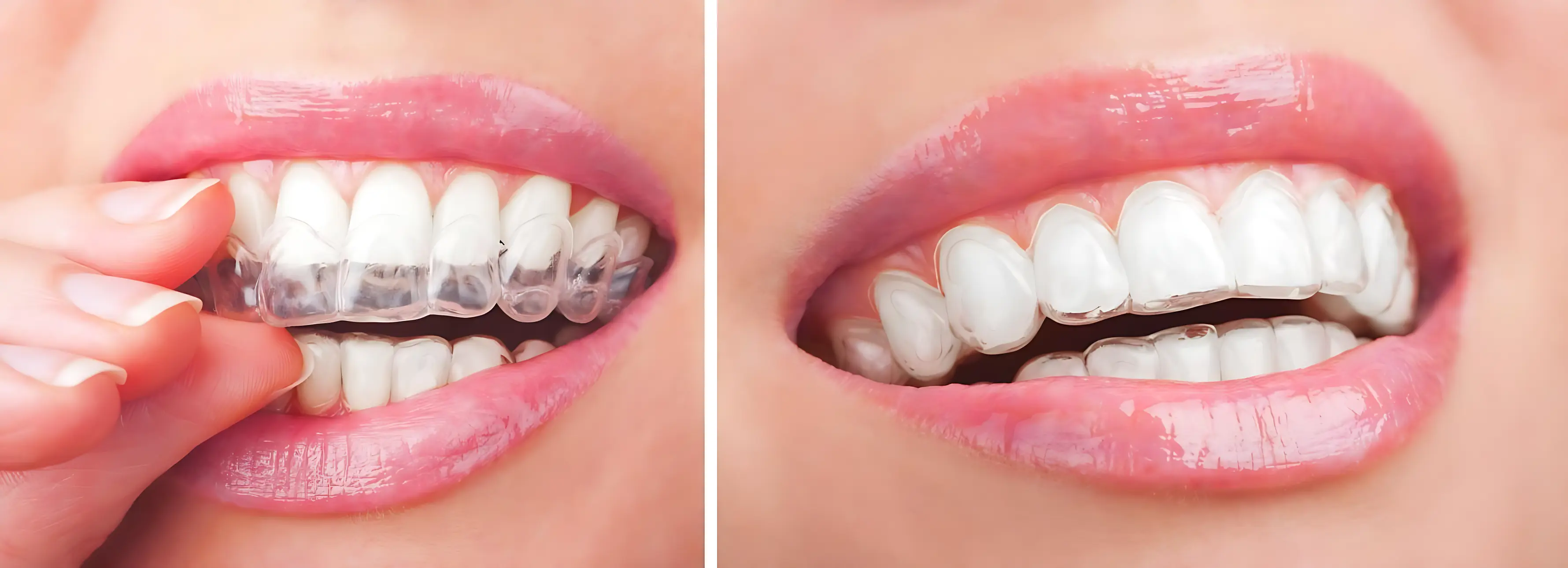
Aligner treatment is one of the orthodontic treatment methods applied for patients who want to correct their tooth alignment in an aesthetic way without braces. In this method, custom-made clear aligners are used in stages.
Table of Contents
OpenThe clear aligner helps teeth move in the planned direction by applying light and controlled pressure. Whether the treatment is suitable or not is determined only after an initial examination, occlusion evaluation, and, if necessary, additional diagnostics.
During the consultation with dentist Dr. Ummahani Huseynova, tooth alignment, occlusion, oral hygiene, periodontal status, and suitability for clear aligners are evaluated individually.
What is an Aligner and How Does It Work?
An aligner is a transparent, removable orthodontic tray used to correct tooth alignment. It is custom-made for the patient's teeth and is changed progressively according to the dentist's plan. This treatment is mostly evaluated for mild to moderate tooth alignment issues.
Clear aligners are not permanently fixed to the teeth. Patients can remove them while eating, brushing their teeth, and performing oral hygiene care.
Therefore, this method can be preferred for both aesthetic appearance and daily comfort. However, this is not just a convenient appliance; it is an orthodontic treatment conducted under medical supervision.
The patient must use the aligners in accordance with the wear schedule prescribed by the doctor. If follow-up checkups are delayed, the progress of the treatment may slow down.
In Which Cases Are Clear Aligners Used?
Clear aligners can be used for mild to moderate tooth alignment problems. These cases may include crowding, spacing, anterior teeth misalignment, and mild relapse occurring after previous orthodontic treatment. The final decision is made based on the clinical examination.
Clear aligners can be evaluated in the following cases:
- Presence of mild to moderate dental crowding;
- Observed interdental spacing;
- Mild misalignment in the anterior teeth;
- Tooth relapse after previous orthodontic treatment;
- Malocclusion issues that are not severe;
- When the patient wishes to improve tooth alignment without wearing braces;
- When the patient is capable of properly wearing the aligners throughout the day.
This list should not be considered a diagnosis. The underlying cause of two seemingly identical dental misalignments can be entirely different.
For instance, a patient may believe they only have crowding in the front teeth. However, during the examination, it may be determined that the problem is related to the bite, the condition of the tooth roots, or the skeletal relationship of the jaws.
For Whom Might Aligners Not Be Suitable?
Although this treatment method is considered an aesthetic and comfortable choice, it is not suitable for every patient. A different orthodontic approach may be required in cases of severe malocclusion, significant crowding, jaw discrepancy, and poor oral hygiene.
Aligners may not be an appropriate choice in the following situations:
- Presence of severe malocclusion;
- Observed serious jaw relationship discrepancies;
- When tooth movement requires more complex orthodontic mechanics;
- When the patient cannot adhere to the required wear time;
- Poor oral hygiene;
- Presence of active periodontal disease;
- When tooth decay, dental calculus, or inflammation must be treated beforehand.
For this reason, the "I don't want braces, let me wear clear aligners" approach alone is not sufficient. The main point is to align the patient's desires with clinical indications.
How is Aligner Treatment Performed?
Aligner treatment is carried out through stages of initial examination, diagnostics, customized planning, manufacturing of clear aligners, and follow-up checkups. The goal is not merely to fabricate an aligner, but to accurately plan the tooth movement and monitor the process under dental supervision.
What is Checked During the Initial Orthodontic Examination?
During the initial examination, the patient's complaints, tooth alignment, occlusion status, oral hygiene, and periodontal health are evaluated. At this stage, preliminary suitability for clear aligners is determined, and any necessary pre-treatments are planned in advance.
If there is dental calculus, tooth decay, or gum disease, these must be resolved before starting orthodontic treatment. A healthy oral environment helps the treatment proceed more accurately.
The initial examination is also a decision-making stage for the patient. Here, the approximate course of treatment, patient responsibilities, hygiene requirements, and the retention stage are explained.
Why are Diagnostics and Customized Planning Important?
Diagnostics are essential to determine in which direction and in what sequence the teeth will be moved. In addition to the intraoral clinical examination, photography, digital scanning, X-ray examinations, and further radiographic diagnostic evaluations can be performed if necessary.
At this stage, the total number of clear aligners that might be required and the estimated duration of treatment are evaluated. The potential outcome must be realistically explained to the patient.
The potential for tooth movement varies for each patient. Therefore, planning is carried out by considering the bite and the condition of the tooth roots, not just the visible misalignment of the teeth.
How are Clear Aligners Fabricated and Used?
Clear aligners are custom-made for the patient's teeth and are used sequentially according to the treatment phases. Each aligner is designed to move the teeth by a small increment in the planned direction. Aligner replacement must be carried out exactly as prescribed by the clinician.
The patient should not modify the orthodontic tray routine on their own initiative. Reverting to a previous stage, switching to the next aligner prematurely, or not wearing the appliance for an extended period can adversely affect the course of treatment.
If the aligner does not fully seat on the teeth, stays loose, feels excessively tight, or is damaged, it is necessary to consult the doctor. Making independent decisions is incorrect.
Why Should Follow-up Checkups Not Be Delayed?
Follow-up checkups are crucial to verify whether the teeth are moving according to plan and whether the aligners are seating correctly. During these visits, the patient's compliance with the wear schedule is also evaluated. If a minor discrepancy is not detected in time, it can impact subsequent stages.
Even though the clear aligner is a removable appliance, treatment should not be managed independently. Orthodontic supervision is a fundamental condition for the process to proceed safely and as planned.
The number of follow-up appointments varies depending on the treatment plan. The patient should not delay these appointments.
How Many Hours a Day Should Aligners Be Worn?
Aligners are typically used for most of the day. In many treatment plans, the orthodontic aligner must remain on the teeth for approximately 20–22 hours a day. This metric serves as general information, and the exact wear schedule is determined individually by the clinician based on the custom plan.
The aligners are removed primarily during meals, toothbrushing, and oral hygiene care. They must remain on the teeth at all other times.
The patient should not expect the same result by wearing the appliance only at night. If the wear schedule is not followed, the teeth may not fully achieve the planned movements.
This, in turn, can lead to prolonged treatment duration, additional refinements, and, in some cases, the need for new aligners.
Can You Eat with Aligners On?
Eating with aligners is not recommended. The clear aligner must be removed during meals because food debris can become trapped between the aligner and the teeth. This can increase the risk of dental caries, halitosis (bad breath), gum sensitivity, and damage to the aligner itself.
Colored and hot beverages can also affect the appearance and shape of the aligner. It is a more correct approach to remove the appliance when consuming tea, coffee, and sugary drinks.
The aligner should not be reinserted after eating without cleaning the teeth. If food debris remains on the tooth surface, oral hygiene can deteriorate.
There is usually no need to remove the aligner when drinking water. However, the oral cavity should be cleaned after consuming hot and colored beverages.
What is the Main Difference Between Aligners and Braces?
Aligners and braces serve the same purpose: to correct tooth alignment and malocclusion. The main differences lie in their appearance, method of use, ease of hygiene, and the level of responsibility required from the patient. The choice should be based on clinical indications, not just aesthetic appearance.
| Comparison | Clear Aligner | Braces |
|---|---|---|
| Appearance | Less noticeable | Can be visible depending on the type |
| Usage | Removable | Permanently fixed to teeth |
| Hygiene | Easier to clean teeth | Requires more meticulous cleaning |
| Discipline | Patient responsibility is crucial | Cannot be removed by the patient |
| Suitability | Can be chosen for mild to moderate cases | Can be superior for more complex cases |
How Do Aligners Differ from Braces in Terms of Appearance?
Since this appliance is much less noticeable on the teeth, it can be preferred by patients seeking aesthetic orthodontic treatment. Braces, on the other hand, can be more visible or more aesthetic depending on whether they are metal, ceramic, or sapphire types.
An important point here is that a clear aligner is not braces. Although patients sometimes refer to them as "invisible braces," this appliance is actually not permanently fixed to the teeth. It is a removable, clear orthodontic tray.
Is Oral Hygiene Easier with Aligners?
Since clear aligners are removable, brushing and flossing the teeth is much more convenient. With braces, food debris can accumulate around the brackets and the orthodontic archwire. Nevertheless, a patient using aligners must approach hygiene even more seriously.
Because the aligner snugly fits over the teeth, no food debris should remain on the tooth surface. Otherwise, the risk of tooth decay and gum problems may increase.
The appliance itself must also be kept clean separately. It should not be washed with hot water, as high temperatures can deform its shape.
In Which Cases Might Braces Be More Suitable?
In more complex bite problems, severe dental crowding, and complex tooth movements, braces may be a more appropriate choice. For some patients, a combined orthodontic approach is necessary. Which method will be selected is determined only after a thorough examination and diagnostic evaluation.
The patient's aesthetic desire alone is not sufficient for the choice. The actual condition of the teeth, bite, and jaw relationships must be taken as a basis.
The goal is not just to make the teeth look straight. A functional and healthy occlusion must also be considered.
What Does the Price of Aligners Depend on in Baku?
The price of aligners in Baku varies according to the patient's tooth alignment, occlusion status, the severity of the treatment case, and the number of clear aligners required. Therefore, it is incorrect to quote an exact price without an examination. The cost is determined based on an individual plan.
The main factors affecting the price are:
- The degree of dental crowding;
- The volume of interdental spacing;
- The presence or absence of malocclusion;
- The total number of clear aligners needed;
- The estimated duration of the treatment;
- The need for digital scanning and diagnostics;
- The number of follow-up checkups;
- The retention phase and the need for retainers;
- The presence of tooth decay, dental calculus, or gum problems prior to treatment.
The best course of action for the patient is to schedule an initial examination. Following the exam, the doctor can clearly explain the factors influencing the price.
What is a Retainer and Why is It Necessary?
A retainer is one of the appliances that helps teeth maintain their new positions after orthodontic treatment. After aligner treatment is completed, retention—meaning the stabilization of the outcome—must be planned. This phase is critical to minimize the risk of teeth relapsing into their previous positions.
Retainers can be removable or fixed. Which type is suitable is determined by the clinician based on the patient's condition.
If the patient neglects the retainer phase after treatment is completed, shifting can occur in the teeth again. Therefore, maintaining the result is just as important as the treatment itself.
The retention period is not the same for every patient. The wear regimen must be planned individually.
What Should Be Considered During Aligner Treatment?
In aligner treatment, the outcome does not depend solely on the fabrication of the trays. The patient's proper use of the aligners, adherence to oral hygiene guidelines, and not delaying follow-up checkups directly affect the progress of the treatment.
The aligners must be used in the exact sequence prescribed by the clinician. When the patient fails to wear them for extended periods, removes them too frequently, or transitions to the next aligner prematurely, the planned movement of the teeth can be disrupted.
If an aligner does not fully seat on the teeth, is damaged, or is lost, the patient should not make an independent decision. In such cases, it is mandatory to contact the doctor.
During the treatment period, there may be tooth sensitivity, a feeling of pressure when transitioning to a new aligner, and mild discomfort. These situations are usually associated with tooth movement. If there is severe and persistent pain, it is necessary to consult the doctor.
How Should Oral Hygiene Be Managed During Aligner Treatment?
A patient using clear aligners must pay special attention to oral hygiene. Since the aligner covers the teeth, food debris and plaque must not remain on the tooth surface. If the teeth and the appliance are not kept clean, the risk of dental caries and gum disease can increase.
Teeth must be brushed after meals. Dental floss should be used when necessary.
The aligner must be kept clean separately and protected in a special case. It is incorrect to wrap it in a napkin, put it in a pocket, or throw it loosely into a bag.
If there is tooth decay, dental calculus, or gum inflammation in the oral cavity, these problems must be resolved before starting the treatment.
What to Look for When Choosing a Dentist for Aligner Treatment in Baku?
When choosing a dentist or a dental clinic for aligner treatment in Baku, it is not correct to look solely at the price. The core aspects are a proper examination, clear planning, realistic expectations, and orthodontist-dentist supervision. Both suitability and limitations should be openly explained to the patient.
The following points can be considered during the selection process:
- Is the initial examination conducted thoroughly?
- Is the occlusion evaluated alongside tooth alignment?
- Is the general condition of the oral cavity checked?
- Is the necessity of digital scanning and additional diagnostics explained?
- Are cases where clear aligners are unsuitable openly discussed with the patient?
- Is the treatment duration presented realistically?
- Is the retention phase explained in advance?
- Are the factors affecting the price stated transparently?
Good planning should consider not only the patient's desire for "straight-looking teeth," but also oral health and the functional aspect of the occlusion.
Aligner Treatment with Dr. Ummahani Huseynova
Aligner treatment with Dr. Ummahani Huseynova begins with an initial evaluation of the patient's tooth alignment, bite, and oral cavity during the consultation. In this meeting, the patient's aesthetic expectations, readiness for treatment, and suitability for clear aligners are addressed individually.
During the consultation, the patient can be informed regarding these questions:
- Are clear aligners suitable for my teeth?
- Could braces be a more correct choice?
- Is there a problem in my teeth that needs to be treated first?
- How should I use the aligners?
- Approximately how long can the treatment take?
- What factors will the price depend on?
- Is it necessary to wear a retainer after the treatment?
This approach helps the patient make a decision without rushing. Treatment must be conducted based on medical indications and the clinician's plan.
Frequently Asked Questions
What is an aligner?
Do teeth straighten with clear aligners?
How many hours a day should aligners be worn?
Can you eat with aligners on?
Do aligners cause pain?
Are aligners suitable for everyone?
What is the main difference between aligners and braces?
How much do aligners cost in Baku?
Is it necessary to wear a retainer after aligners?
What should be done if an aligner is lost?
Book an Appointment for Aligner Treatment
If you want to correct your tooth alignment without braces, in an aesthetic way, and under medical supervision, aligner treatment may be an appropriate choice for you. However, this decision should only be made based on an examination and individual planning.
By scheduling an initial examination for aligner treatment in Baku with dentist Dr. Ummahani Huseynova, you can find out the suitability of your teeth for clear aligners, the treatment duration, and the factors affecting the price.