
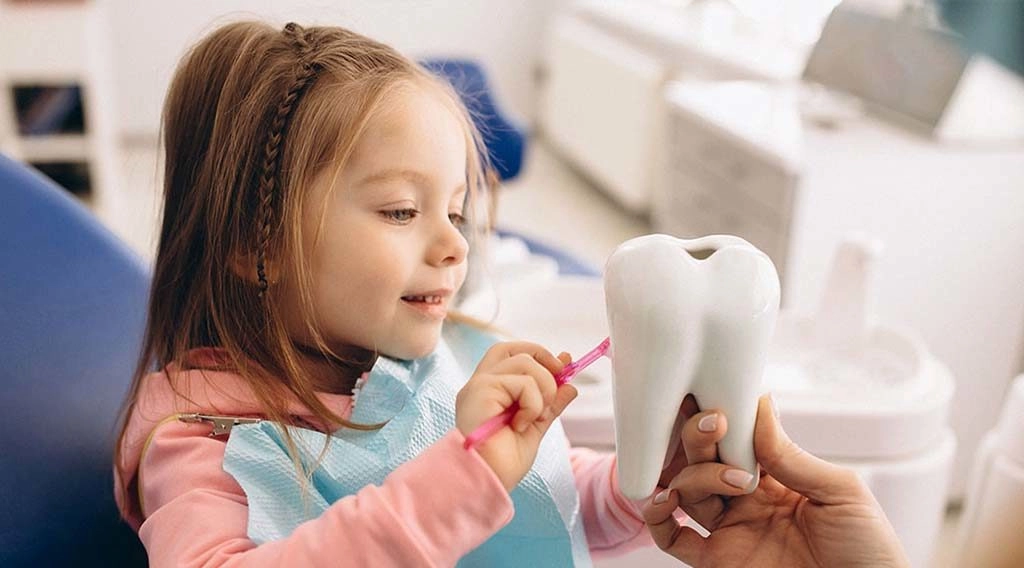
Pediatric dentistry is a specialized branch of dentistry that focuses on the protection, management, and treatment of primary teeth, permanent teeth, and overall oral health in children. A pediatric dentist is vital not only when a toothache occurs, but also to prevent caries, protect primary teeth in a timely manner, and help the child acclimatize to the dental environment.
Table of Contents
OpenParents sometimes dismiss primary teeth, assuming that "they will fall out anyway." In reality, primary teeth crucially affect a child's ability to chew comfortably, speak correctly, maintain adequate space in the dental arch for permanent teeth, and guide future permanent tooth alignment.
If there is a black spot, pain, swelling, decay, fracture, or trauma on a tooth, waiting is counterproductive. In such cases, a thorough pediatric dental examination is performed to evaluate the status of the tooth, and the appropriate clinical approach—whether it involves dental fillings, pulp therapy, tooth extraction, fissure sealants, or fluoride prophylaxis—is carefully explained to the parent.
What is Pediatric Dentistry?
Pediatric dentistry is a clinical discipline dedicated to monitoring children's primary teeth, permanent teeth, gingival tissues, and overall oral health. The objective here is not merely treating a symptomatic tooth, but actively preventing dental caries, managing dental anxiety, and diagnosing potential developmental anomalies early.
This medical field is also professionally referred to as pedodontics. Simply put, pedodontics is dentistry tailored for children. Because a child's dental anatomy, anxiety levels, behavior, and physiological responses to treatment differ significantly from adults, a distinct and patient-centric approach is required.
Pediatric dentistry is primarily indicated in the following scenarios:
- Presence of dental caries in primary teeth;
- Onset of localized or generalized dental pain;
- Visible dark discolorations or structural breakdown on teeth;
- Premature mobility of a primary tooth;
- Incidence of dental or maxillofacial trauma;
- Management of dental fear and severe anxiety;
- Indications for preventive care and topical fluoride application;
- Eruption of the first permanent dentition.
When pediatric dental care initiates with routine preventive visits, the child acclimates to the dental environment much more comfortably, allowing clinical issues to be intercepted before they progress.
Which Age Group Does Pedodontics Serve?
Pedodontics manages the oral and dental health of patients from infancy through adolescence. Throughout these developmental stages, primary teeth, permanent tooth eruption patterns, caries susceptibility, dental injuries, and preventive assessments are monitored in accordance with the patient's chronological and biological age.
In infants, clinical focus is directed toward tracking the initial eruption of primary incisors and educating parents on appropriate infant oral hygiene practices. During the preschool years, preserving the integrity of primary molars becomes paramount. Throughout school-age development, clinicians closely monitor permanent tooth eruption, implement fissure sealants and topical fluoride prophylaxis, and evaluate potential malocclusions.
Therefore, pedodontics extends far beyond simply "treating a child's tooth." The overarching goal is to protect the child's dental health dynamically at each developmental phase while fostering a fear-free, trusting relationship with the dentist.
When Should the First Dental Visit Take Place?
Scheduling a child's first dental examination immediately following the eruption of the first tooth, or no later than 1 year of age, ensures that parents receive early guidance on correct oral hygiene protocols. This initial visit is typically non-invasive and focuses on monitoring eruption milestones, assessing dietary habits, and evaluating caries risk factors.
The first visit is also highly beneficial for introducing the child to the dental operatory. When a child is brought to the clinic only when experiencing acute pain, their initial experience can be associated with fear and physical discomfort. Conversely, a routine preventive check-up establishes a calm and positive baseline experience.
The American Academy of Pediatric Dentistry (AAPD) and the American Dental Association (ADA) both recommend that a child's first dental visit occur within six months after the eruption of the first tooth, and no later than their first birthday.
Why Is the Treatment of Primary Teeth Critical?
Although primary teeth are transitional, they play an indispensable role in a child's overall maxillofacial development. They facilitate adequate mastication, support proper speech articulation, and act as natural space maintainers for the underlying permanent teeth. If a primary tooth becomes carious and symptomatic, delaying care under the assumption that "it will fall out anyway" is clinically incorrect.
Premature loss of a primary tooth can lead to the mesial migration or drifting of adjacent teeth into the empty space. This structural shift frequently results in arch length discrepancies, severe crowding, and complex permanent tooth impactions or alignment issues in the future.
Furthermore, a symptomatic primary tooth negatively impacts a child's nutritional intake, sleep patterns, speech, and daily well-being. Immediate pediatric dental evaluation is critical if the child experiences nocturnal pain, gingival swelling, localized suppuration, or facial cellulitis.
When Is a Primary Tooth Preserved with a Dental Filling?
If dental caries in a primary tooth has not progressed deeply into the dentin or compromised the pulp chamber, a conventional restoration (filling) is indicated. A dental filling involves the meticulous removal of demineralized, decayed structures followed by the anatomical reconstruction of the cavity using biocompatible restorative materials. The goal is to preserve the primary tooth and restore efficient masticatory function.
The suitability of a dental filling cannot be accurately determined via visual inspection at home. A lesion that appears superficially as a small dark spot may have extensive, deep progression within the dentin. Consequently, professional diagnostic evaluation is required if a child presents with pain, thermal sensitivity, food impaction, or visible cavitation.
While restorations are standard procedures in pediatric dental practice, they may not be suitable for severely broken-down teeth. A clinician must evaluate the specific state of the tooth before advising the parents on the most predictable treatment path.
When Is Pulp Therapy Indicated for a Primary Tooth?
When dental caries extends deeply into the dentin, causing irreversible inflammation of the dental pulp or direct pulpal exposure, pulp therapy becomes necessary. This condition often manifests clinically as spontaneous nocturnal pain, prolonged thermal sensitivity, localized gingival edema, fistulas, or the child's outright refusal to chew food.
Parents frequently ask, "Can a primary tooth undergo root canal treatment?" Yes, depending on the diagnostic status of the tooth, pediatric pulp therapies (such as pulpotomy or pulpectomy) are routinely performed. The primary objective is to maintain the tooth in the arch, alleviate acute discomfort, and prevent the spread of infection to the succedaneous permanent tooth germ.
Pulp therapy is not universally applicable to every primary tooth. If a tooth exhibits extensive crown destruction, advanced root resorption, or severe periapical/interradicular bone pathology, alternative treatment modalities may be indicated based entirely on clinical and radiographic findings.
When Is a Primary Tooth Extracted?
A primary tooth is extracted only when its structural or periodontal preservation is no longer clinically viable. Extraction may be indicated in cases of gross caries destruction, untreatable chronic periapical infections, severe dental trauma, extensive root fractures, or when a retained primary tooth physically obstructs the normal eruption pathway of its permanent successor. However, extraction is always considered a last resort in pedodontics.
The pediatric dentist will first assess whether the tooth can be preserved via restorative fillings, pulp therapy, or provisional crowns. If an extraction is deemed unavoidable, the underlying clinical rationale must be communicated clearly and comprehensively to the parents.
In many instances, following the extraction of a primary tooth, the fabrication of a space maintainer is indicated. This appliance prevents the closure of the space and preserves the necessary arch perimeter for the permanent dentition. This definitive decision requires a comprehensive pre-operative evaluation.
How Are Dental Caries Treated in Children?
The management of dental caries in pediatric patients is tailored according to the depth of the carious lesion, the presence or absence of pulpal symptoms, and the overall restorability of the tooth. The clinician performs an intraoral examination, utilizes diagnostic radiographs if indicated, and selects the most predictable intervention, such as a restoration, pulp therapy, or extraction.
When dental caries is diagnosed at an early stage, intervention remains minimally invasive and straightforward. Conversely, neglected lesions progress rapidly toward the pulp, significantly increasing acute pain and the risk of periapical infections. Therefore, the presence of dark stains, localized pain, food impaction, or mucosal swelling warrants immediate evaluation.
Pediatric dental management goes beyond merely "restoring" a cavity. The clinician evaluates the multifactorial etiology of the disease, analyzes the child's oral hygiene compliance, assesses dietary sugar intake, and formulates a comprehensive caries risk assessment for the future.
What Are the Signs of Dental Caries in Children?
In children, dental caries frequently initiates asymptotically. The earliest clinical presentation may appear as a chalky white spot, or a yellowish, brown, or black discoloration on the enamel surface. As the lesion progresses into dentin, localized sensitivity to sweets, thermal stimuli, or direct masticatory pressure may develop. Acute pain typically signals advanced stages of decay.
Parents should carefully monitor for the following clinical signs:
- Black or brown discolorations on the occlusal or interproximal surfaces;
- Pain or discomfort during mastication;
- Spontaneous or nocturnal toothaches;
- Persistent halitosis (bad breath);
- Localized erythema or swelling of the gingiva;
- Unilateral chewing or favoring one side of the mouth;
- Refusal to consume firm or hard foods;
- Visible fractures or structural cavitation of the tooth.
If any of these signs are detected, attempting to manage the issue at home with baking soda rinses, saline solutions, or temporary analgesics is inappropriate, as these methods do not eliminate the etiology. The patient must be evaluated by a pediatric dentist.
What Are the Procedural Stages of Pediatric Caries Treatment?
Pediatric caries treatment initiates with a non-threatening, calming diagnostic examination. The clinician listens to the child's subjective complaints, performs an objective intraoral assessment, and determines the extent of the carious lesion. When indicated, periapical or bitewing radiographs are utilized to evaluate the root morphology and surrounding alveolar bone.
The clinical workflow is typically structured as follows:
- Acclimatization of the child to the dental team and operatory chair;
- Comprehensive clinical intraoral examination;
- Diagnostic radiographic evaluation (when indicated);
- Definitive diagnosis and selection of a restorative, pulpal, or surgical pathway;
- Explanation of the procedure to the child using age-appropriate terminology;
- Execution of the dental procedure using behavior guidance techniques;
- Delivery of customized home care and preventive recommendations.
If a child exhibits severe dental fear, the initial appointment may be limited strictly to an introduction and a basic visual exam. This phase is not a loss of clinical time; rather, it establishes the essential psychological foundation required for successful pediatric dentistry.
What Are Fissure Sealants and Fluoride Prophylaxis?
Fissure sealants and topical fluoride applications are highly effective preventive procedures designed to mitigate the risk of dental caries in children. Fissure sealants primarily protect the highly susceptible occlusal surfaces of posterior teeth, whereas topical fluoride applications strengthen the enamel hydroxyapatite matrix, reducing overall caries susceptibility.
These interventions are designed as preventive measures before structural damage occurs. However, they should not be applied automatically to every patient. The pediatric dentist must first analyze the patient's specific oral health status, caries risk profile, oral hygiene compliance, and dental age.
Which Teeth Are Indicated for Fissure Sealants?
Fissure sealants are primarily indicated for the occlusal surfaces of newly erupted permanent molars. These surfaces feature deep grooves, pits, and fissures that act as anatomical stagnation areas. Because food debris and plaque easily accumulate within these narrow micro-spaces, mechanical toothbrushing is often insufficient to fully cleanse them.
The application of a resin or glass ionomer sealant effectively obliterates these deep anatomical grooves, significantly reducing plaque stagnation. The procedure is non-invasive, completely painless, and requires no mechanical removal of sound dental structure.
If dental caries is already radiographically or clinically present within the fissures, a definitive restoration is required instead. Fissure sealants are not designed to mask active, cavitated decay; they are utilized strictly to protect sound, at-risk surfaces.
Who is a Candidate for Fluoride Prophylaxis?
Topical fluoride prophylaxis is indicated for children demonstrating a moderate-to-high caries risk profile, structural enamel hypoplasia, or rapid, multi-surface demineralization, and is performed strictly under professional clinical guidelines. Professional fluoride varnish or gel is applied topically to the enamel surfaces, facilitating remineralization and enhancing structural acid resistance.
Professional fluoride applications do not substitute for daily mechanical plaque removal. The patient must maintain a age-appropriate home hygiene routine, limit dietary free sugars, and attend regular recall examinations.
Parental concerns regarding fluoride safety typically relate to systemic overdosage. In modern pediatric dental practice, professional topical fluoride applications are highly precise, controlled, and safe when administered in accordance with established clinical dosing standards to effectively lower caries incidence.
What Is the Structural Difference Between Fissure Sealants and Fluoride?
Fissure sealants and fluoride prophylaxis are completely distinct preventive modalities. Fissure sealants provide a physical, mechanical barrier over the deep occlusal anatomy of molars. Fluoride prophylaxis, conversely, acts biochemically to remineralize enamel across all smooth and retentive tooth surfaces. The ideal selection depends entirely on the child's specific dental status and caries risk.
| Procedure | Primary Objective | Clinical Indications |
|---|---|---|
| Fissure Sealants | Provides a physical barrier over deep occlusal pits and grooves | Newly erupted permanent molars with highly retentive, deep fissure anatomy |
| Fluoride Prophylaxis | Biochemically strengthens enamel and promotes remineralization | Moderate-to-high caries risk patients, administered via professional guidelines |
| Home Hygiene Care | Maintains daily mechanical plaque disruption and oral biofilm control | The foundational base requirement for every pediatric patient |
What Protocols Form the Basis of Pediatric Dental Trauma Management?
Dental trauma in children frequently arises from falls, sports injuries, recreational activities, or accidental physical impacts. Immediate pediatric dental evaluation is mandatory if a tooth is fractured, luxated, avulsed, or accompanied by soft tissue hemorrhage, acute pain, or facial edema. The long-term prognosis depends heavily on the specific nature of the injury and the timeliness of clinical intervention.
The primary responsibility of the parent is to remain calm. The child's oral cavity should be carefully inspected, and active bleeding managed by applying gentle pressure with a clean piece of sterile gauze. If a tooth segment has fractured, the fragment should be located, preserved, and brought immediately to the clinician.
The complete avulsion (displacement out of the socket) of a permanent tooth constitutes an absolute dental emergency. In line with the trauma protocols established by the American Academy of Pediatric Dentistry (AAPD), an avulsed permanent tooth must be preserved immediately in an appropriate storage medium, such as cold milk, Hanks' Balanced Salt Solution (HBSS), or the patient's saliva, while seeking immediate emergency care.
What Is the First Step in Primary Tooth Trauma?
If a primary tooth sustains a traumatic injury, parents must never attempt to manually replant or force the tooth back into its socket. Because the root apex of a primary tooth lies in close anatomical proximity to the developing permanent tooth germ, improper manipulation can cause irreversible developmental defects or cessation of growth in the permanent successor. The correct protocol is a calm visual assessment followed by an immediate professional examination.
If soft tissue hemorrhage is present, apply gentle compression with sterile gauze. The child's mouth may be carefully rinsed with clean water. If localized swelling, severe pain, tooth displacement, or mucosal lacerations are observed, diagnostic imaging and a clinical exam must not be delayed.
The clinical philosophy that "it is just a baby tooth, a new one will grow" is a dangerous misconception in trauma cases. Primary tooth injuries can induce underlying permanent tooth pathology, making professional diagnosis essential.
What Immediate Actions Are Required for an Avulsed Permanent Tooth?
When a permanent tooth is completely avulsed, time is the single most critical factor determining periodontal ligament cell viability. The tooth must never be handled by its root surface; it must be held strictly by the visible, clinical crown. If the root surface is contaminated, it should be rinsed very gently under cold water without any mechanical scrubbing or chemical disinfection. The next immediate step is to contact a dentist immediately.
Allowing an avulsed tooth to dry out in a tissue or napkin severely compromises the prognosis. The tooth must be transported immediately in an appropriate wet storage medium, such as cold milk or saline, as directed by the emergency dental team.
In these critical situations, waiting at home is contraindicated. The faster the patient reaches a pediatric dental provider, the higher the probability of successful tooth stabilization and long-term retention.
How Is Care Planned for Children with Significant Dental Fear?
When managing a pediatric patient presenting with pronounced dental fear, treatment must proceed at a structured pace that respects the child's psychological readiness. For many anxious patients, an initial non-invasive desensitization (acclimatization) visit is sufficient. In highly uncooperative or complex cases, care is segmented into short appointments, and pharmacotherapeutic behavioral management techniques, such as sedation, may be discussed separately.
Dental anxiety is a recognized physiological response in pediatric patients. The solution lies not in physical coercion, but in communicating what will occur using age-appropriate behavior guidance methodologies. The clinician introduces instruments using simple analogies (e.g., the "tell-show-do" technique), allowing the child to build trust incrementally.
Parental behavior also plays a key role in the child's perception. Phrases like "Don't worry, it won't hurt" often inadvertently heighten the child's vigilance and anxiety. Parents are advised to remain supportive, relaxed, and explain that the pediatric dentist is a helpful specialist dedicated to making their teeth healthy.
What Does a Desensitization (Acclimatization) Appointment Entail?
A desensitization or acclimatization appointment is a gentle, introductory visit designed to familiarize the young patient with the pediatric dentist, the dental chair, the clinical ambient sounds, and basic diagnostic instruments. Active restorative treatment is rarely performed during this visit; the primary clinical goal is to alleviate situational anxiety and cultivate patient rapport.
This approach is highly indicated for children undergoing their first dental visit, patients who have experienced past dental trauma, or those exhibiting elevated baseline anxiety. Instruments are introduced using playful, age-appropriate descriptions, allowing the child ample time to process the environment without clinical urgency.
This methodology is a cornerstone of pediatric dental medicine because establishing a positive, cooperative initial experience significantly streamlines all subsequent clinical recalls and treatments.
When Is the Utilization of Sedation Discussed?
Sedation is not a standard protocol for every pediatric patient. It is considered and discussed by the clinician only when managing severe, unmanageable dental phobia, extensive full-mouth rehabilitation needs, prolonged surgical procedures, or patients with specific medical, physical, or cognitive exceptionalities. The decision is based on a rigorous evaluation of the child's systemic health, treatment volume, and a comprehensive risk-benefit analysis.
Parents must receive evidence-based, transparent information regarding these options. Generalized claims that sedation is "completely risk-free" or "indicated for all children" are clinically inaccurate. Sedation modalities must be selected based on strict clinical indications, administered in appropriately equipped settings, and monitored by qualified professionals.
For the vast majority of pediatric patients, advanced pharmacotherapeutic sedation is unnecessary. Structured behavior guidance, empathetic explanations, abbreviated clinical sessions, and positive parental reinforcement are fully sufficient to achieve excellent cooperation.
What Clinical Factors Determine the Cost of Pediatric Dental Treatments?
The financial investment required for pediatric dental treatments is calculated individually for each patient and cannot be represented by a single, generalized fee. The total cost varies dynamically based on the complexity and severity of the dental pathology, the specific restorative or surgical treatment modality selected, the material specifications utilized, and the child's level of clinical cooperation.
Key clinical determinants affecting treatment costs include:
- The scope of the initial diagnostic examination, including necessary radiographic imaging;
- The specific number of teeth requiring active clinical intervention;
- The structural depth of caries, which dictates a restorative filling versus complex pulp therapy;
- Indications for the surgical extraction of non-restorable primary teeth;
- The specialized properties of the restorative and preventive materials used;
- The requirement for specialized behavioral management techniques or extended acclimatization sessions;
- Potential indications for pharmacotherapeutic sedation or multidisciplinary medical monitoring;
- The number of scheduled post-operative follow-ups and maintenance recalls.
A definitive treatment plan and accurate cost breakdown can only be established following a comprehensive, in-person clinical examination. This initial assessment ensures transparent treatment planning, establishing realistic expectations for parents while precluding unnecessary procedures.
Which Parameters Validate the Choice of a Pediatric Dentist in Baku?
When selecting a pediatric dentist in Baku, choosing a provider based solely on financial cost is clinically short-sighted. Parents should carefully evaluate the clinician's expertise in pediatric behavior guidance, their ability to explain complex diagnostic pathways clearly, adherence to strict infection control and sterilization standards, availability of advanced diagnostic infrastructure, and the presence of a child-friendly clinical environment.
When evaluating a pediatric dental professional, reviewing the following criteria can be highly beneficial:
- Does the clinician exhibit patience and employ evidence-based behavior guidance for anxious children?
- Is the proposed treatment plan outlined clearly, transparently, and comprehensively to the parents?
- Are the specific clinical indications for primary tooth preservation versus extraction clearly justified?
- Are customized, long-term preventive protocols and home care counseling provided?
- Are diagnostic radiographs and advanced evaluative measures utilized appropriately when indicated?
- Are advanced options like sedation discussed objectively, without commercial inflation or over-medicalization?
- Does the clinic prioritize non-coercive, structured desensitization protocols?
- Are routine, periodic clinical recall intervals systematically organized and scheduled?
A pediatric dentist does not merely treat dental caries. The specialist must seamlessly integrate technical clinical excellence, psychology-driven behavior management, parental education, and long-term preventive strategies to safeguard the child's developing stomatognathic health.
What Core Principles Guide Dr. Ummahani Huseynova’s Pediatric Dental Examinations?
During a comprehensive pediatric dental examination, the evaluation extends far beyond addressing a single symptomatic tooth. Dr. Ummahani Huseynova meticulously assesses the integrity of the primary dentition, performs localized caries risk assessments, examines periodontal and mucosal health, analyzes home brushing efficiency, reviews nutritional habits, gauges dental anxiety levels, and monitors permanent tooth eruption sequences in unison.
The primary goal of the initial consultation is never the hasty execution of invasive procedures. Rather, it focuses on identifying the precise etiology of the oral condition. If a superficial lesion is diagnosed, a minimally invasive restoration is selected. If the destruction extends pulpally, advanced pulp therapy is indicated. If a tooth is deemed non-restorable, a surgical extraction coupled with space management is systematically discussed.
Every phase of the diagnostic and therapeutic journey is communicated transparently to the parents. Outlining which teeth require intervention, the clinical rationale behind the chosen treatment modality, required home-care adjustments, and the precise timing of future recalls ensures a foundation of clinical trust, paving the way for smooth, successful appointments as the child grows.
Frequently Asked Questions
At what age should a child have their first dental examination?
Why should primary teeth be treated if they are going to fall out anyway?
How are dental caries managed and treated in children?
When does a primary tooth require pulp therapy?
Under what clinical conditions is a primary tooth extraction performed?
What is a fissure sealant procedure?
Is professional topical fluoride prophylaxis safe and suitable for children?
What steps should be taken if a child exhibits severe dental anxiety or fear?
Is pediatric dental treatment under sedation indicated for every child?
What immediate emergency protocols apply to pediatric dental trauma or fractures?
What clinical variables dictate the total cost of pediatric dental procedures?
Is it safe to delay treatment if a child complains of a primary toothache?
Conclusion
Pediatric dentistry extends far beyond managing acute toothaches; it constitutes a vital clinical discipline focused on preserving primary dentition, implementing timely restorations, providing advanced pulp therapy, and managing dental trauma to ensure the long-term integrity of the developing stomatognathic system. When preventive, restorative, and behavior guidance strategies are implemented early, pediatric treatment plans yield highly predictable, stable results.
If your child is experiencing dental pain, visible caries lesions, signs of dental injury, deep enamel discoloration, localized mucosal swelling, or requires a routine preventive examination, establishing a definitive treatment plan requires an expert clinical assessment. Scheduling a professional consultation with a pediatric dentist ensures that your child’s dental development is evaluated accurately, allowing you to select the most predictable and evidence-based therapeutic pathway.