
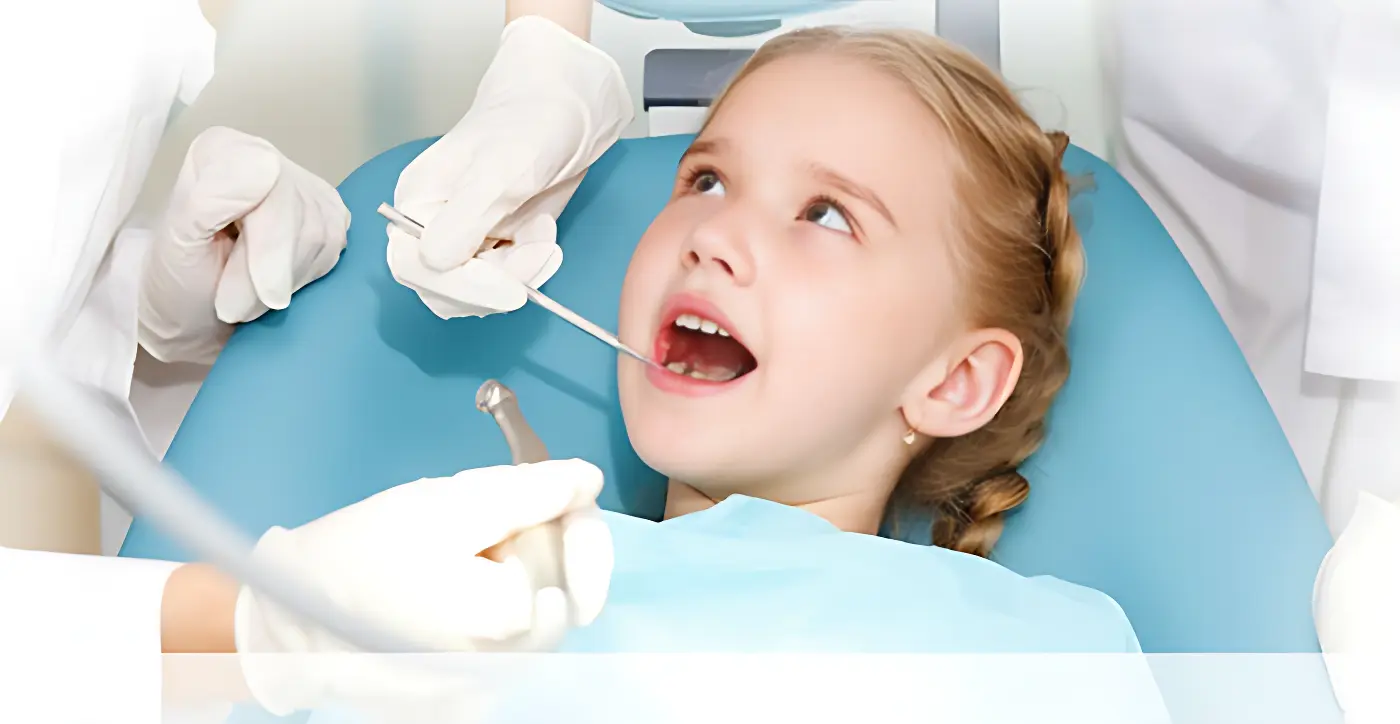
Pediatric orthodontics is a specialized branch of orthodontics dedicated to the early diagnosis and management of dental alignment, malocclusion, and maxillofacial development issues in children. An early orthodontic evaluation allows certain structural discrepancies to be managed more effectively during active growth phases, potentially reducing the need for complex multi-staged interventions in the future.
Table of Contents
OpenEtiological factors such as crowded teeth, dental malpositioning, disproportionate growth of the maxilla or mandible, mouth breathing, and prolonged deleterious oral habits like thumb sucking can significantly impair occlusal development. When these structural deviations are evaluated in a timely manner, a customized interceptive treatment plan can be engineered by utilizing the child's dynamic growth potential.
The primary objective of pediatric orthodontics is not simply to prescribe an appliance to every patient. Rather, it focuses on accurately monitoring dental, skeletal, and occlusal maturation to intervene at the optimal physiological window. For many patients, routine periodic observation is entirely sufficient, whereas others may require interceptive orthodontic plates, myofunctional trainers, functional appliances, or comprehensive brace therapy at a later developmental stage.
What is Pediatric Orthodontics?
Pediatric orthodontics is the clinical discipline that evaluates dental alignment, intermaxillary relationships, and jaw growth throughout the primary, mixed, and permanent dentition stages. The core focus is to identify developing malocclusions at an early stage and formulate a personalized treatment strategy tailored to the child's exact chronological age and skeletal maturation phase.
Because the pediatric craniofacial complex is continually evolving, specific skeletal and dental discrepancies can be structurally guided during active growth. While this interceptive approach does not completely eliminate the possibility of future comprehensive orthodontic needs, it can significantly minimize their severity and complexity.
An orthodontic assessment extends far beyond superficial tooth alignment. The specialist comprehensively evaluates the intercuspation, dental arch morphology, sagittal and transverse jaw relationships, myofunctional habits, and general skeletal growth characteristics. When clinically indicated, advanced diagnostic imaging is utilized to achieve an accurate, definitive diagnosis.
Contrary to common parental assumptions, not every misaligned tooth requires immediate active intervention or appliance placement. In various clinical scenarios, monitoring the patient's natural physiological development over a specific interval is the most prudent decision. Consequently, an appropriate treatment plan can only be established following a detailed face-to-face consultation.
When Should a Child Have an Orthodontic Evaluation?
The initial orthodontic screening for children is generally recommended during the early mixed dentition stage, specifically when the first permanent molars and incisors begin to erupt. This crucial developmental window allows the clinician to evaluate jaw relationships, transversal arch dimensions, and eruption patterns to detect anomalies requiring early intervention.
Many parents mistakenly believe that orthodontic treatment can only be initiated after the complete eruption of the permanent dentition. However, evaluating specific structural issues at an early age provides an opportunity to track skeletal development and intervene at the most stable biological time.
During the initial diagnostic assessment, the following parameters are thoroughly analyzed:
- The sequence and path of dental eruption;
- The width, perimeter, and morphology of the dental arches;
- The sagittal and transverse relationship between the maxilla and mandible;
- The classification of the bite (occlusal status);
- Deleterious oral habits, including thumb sucking or mouth breathing;
- Arch length adequacy and space management for succeeding permanent units.
The primary goal of early screening is not to mandate immediate treatment for every child. For a significant number of patients, regular observation is the ideal pathway, while early orthodontic modalities such as removable plates, trainers, or functional appliances are reserved for specific clinical indications.
What Are the Signs of Orthodontic Problems in Children?
Developing orthodontic discrepancies do not always present as visually obvious crowded teeth. Disruption in eruption sequences, skeletal growth imbalances between the upper and lower jaws, and abnormal myofunctional patterns can all serve as primary clinical indicators for an orthodontic referral. Early identification of these signs allows for more predictable treatment planning.
What Can Dental Crowding and Misalignment Indicate?
Dental crowding is one of the most prevalent orthodontic anomalies observed in pediatric patients. This clinical presentation typically manifests when there is an inherent tooth-size/arch-size discrepancy or when succeeding permanent teeth deviate from their normal eruption pathway.
Parents should consider scheduling an orthodontic consultation if they observe any of the following clinical presentations:
- Overlapping, rotated, or severely crowded dental units;
- Erupting permanent teeth emerging in ectopic positions;
- Asymmetrical alignment of the anterior segment;
- Premature loss or prolonged retention of primary teeth.
While these signs do not automatically indicate a severe underlying pathology, an early specialist evaluation helps establish a clear prognostic timeline for future interceptive care.
What Does a Progressive Jaw Discrepancy Imply?
In certain pediatric cases, the lower jaw may project significantly anterior to the upper jaw, or conversely, the upper jaw may appear prominently protruded. These presentations often indicate a skeletal malocclusion that can compromise facial profile aesthetics, speech development, and long-term masticatory efficiency.
During a comprehensive orthodontic workup, the specialist determines whether the discrepancy is purely dental, skeletal, or a combination of both structural factors. A highly targeted, individualized therapeutic strategy is then designed based on this precise diagnosis.
Do Mouth Breathing and Myofunctional Habits Impact Orthodontic Development?
Chronic, unaddressed mouth breathing, prolonged thumb or finger sucking, extended pacifier use, and atypical swallowing behaviors (tongue thrusting) can exerts adverse mechanical forces on developing dental arches and alveolar processes.
While these habits do not invariably cause a severe malocclusion in every individual, their persistence over an extended period demands expert clinical evaluation to mitigate negative structural changes and select appropriate habit-breaking protocols.
When Are Removable Orthodontic Plates Indicated for Children?
Removable orthodontic plates are specialized appliances utilized during the mixed dentition phase to manage specific dental and arch-dimensional discrepancies. These appliances are not universally applicable to all pediatric patients; they are prescribed strictly based on diagnostic criteria following a detailed clinical exam.
Removable plates can be integrated into a treatment plan to accomplish several clinical objectives:
- Slow mechanical expansion of a constricted dental arch;
- Space maintenance or space regaining for unerupted permanent units;
- Interceptive guidance of minor localized dental misalignments;
- Early management of simple crossbites or localized occlusal interferences.
The clinical efficacy of a removable plate relies heavily on precise laboratory fabrication and strict patient compliance with the prescribed daily wear schedule. Regular adjustment appointments are mandatory throughout the active treatment cycle.
What Are the Clinical Indications for Trainers and Functional Appliances?
Myofunctional trainers and functional appliances are orthopedic tools designed to guide craniofacial growth, optimize occlusal relationships, and neutralize the harmful forces of aberrant soft tissue habits. Each appliance system possesses specific indications, and selection is determined exclusively through diagnostic evaluation.
In Which Clinical Scenarios Are Myofunctional Trainers Prescribed?
Trainers are prefabricated, flexible, removable appliances engineered to re-educate the perioral musculature and eliminate detrimental functional habits rather than applying direct mechanical forces to individual teeth.
A myofunctional trainer may be clinically indicated for:
- Chronic mouth breathing habits (following airway clearance);
- Atypical tongue resting posture and tongue thrusting;
- Abnormal swallowing patterns and hyperactive mentalis activity;
- Mild dental crowding or minor incisor rotations;
- Early-stage interceptive management of developing Class II malocclusions.
Trainers are not a generalized solution for all alignment issues. Their application must be carefully matched to the patient's biological age, the specific nature of the myofunctional disorder, and the specialist's diagnostic parameters.
When Are Functional Orthopedic Appliances Utilized?
Functional appliances are orthopedic modifications utilized during the peak pubertal growth spurt to correct sagittal intermaxillary discrepancies. These systems utilize the forces of the masticatory muscles to guide the growth vectors of the jaws, most commonly to address mandibular retrognathism.
The specialist thoroughly evaluates the following diagnostic factors before prescribing a functional appliance:
- The growth potential of the maxilla and mandible;
- The structural classification of the malocclusion (e.g., skeletal Class II);
- The patient's cervical vertebral maturation (CVM) stage;
- The eruption status of the transitional dentition;
- The overall growth vectors of the craniofacial skeleton.
The determination to utilize a functional appliance is made strictly after a comprehensive diagnostic workup. The ultimate goal is to guide skeletal growth into harmony with the child's natural biological potential.
What Is the Difference Between Trainers, Functional Appliances, and Plates?
Parents frequently inquire about which pediatric appliance delivers the most superior outcome. Clinically, these modalities are not interchangeable alternatives; they are engineered to solve entirely distinct structural problems. The optimal system is selected based on the patient's age, diagnostic data, and specific orthodontic objectives.
| Appliance Type bridge; | Primary Clinical Objective | Common Clinical Indications |
|---|---|---|
| Orthodontic Plate | To modify arch dimensions, regain or maintain arch perimeter | Arch constriction, localized space deficiency, simple crossbites |
| Myofunctional Trainer | To re-educate perioral muscles and eliminate deleterious habits | Mouth breathing, tongue thrusting, atypical swallowing patterns |
| Functional Appliance | To guide skeletal jaw growth and modify intermaxillary relationships | Sagittal jaw discrepancies, mandibular retrognathism during growth spikes |
It is important to emphasize that many pediatric patients do not require active appliance therapy at all; structured, periodic clinical observation is often the most appropriate management path.
Why Is Early Evaluation of Maxillofacial Development Critical?
Early monitoring of jaw development allows the clinician to closely track the growth vectors of the facial skeleton, the transversal stability of the dental arches, and the maturation of the occlusion. The primary focus is to catch structural skeletal deviations at an early stage to maximize the benefit of non-surgical interceptive growth modification.
Skeletal jaw discrepancies are frequently masked by dental compensations and may not be readily apparent to an untrained visual assessment. Consequently, relying solely on dental appearance can lead to missed therapeutic windows. A specialist evaluation simultaneously analyzes dental position and skeletal intermaxillary relationships.
Comprehensive early tracking is essential for diagnosing:
- Transverse maxillary constriction (narrow upper jaw);
- Skeletal sagittal discrepancies (underbites or severe overbites);
- Severe space deficiencies for succedaneous teeth;
- Early structural deviations in the occlusal plane;
- The adverse structural impact of long-standing myofunctional imbalances.
Early diagnostic recognition does not translate to immediate active treatment. In numerous cases, the orthodontist will simply recommend periodic growth tracking. Any active treatment decision is determined strictly by the patient's changing physiological needs.
How Are Malocclusions and Alignment Issues Managed in Adolescents?
By the adolescent phase, the majority of the permanent dentition has erupted, enabling the definitive correction of both dental alignment anomalies and comprehensive malocclusions. The selected therapeutic modality is carefully matched to the specific nature of the malocclusion, the status of residual skeletal growth, and the patient's individual diagnostic records.
Adolescent consultations commonly address the following clinical concerns:
- Severe arch crowding and rotations;
- Generalized or localized interdental spacing (diastemas/tremas);
- Anterior or posterior crossbites;
- Severe deep bites (increased overbite);
- Anterior open bites;
- Aesthetic concerns regarding alignment and smile balance.
Depending on the individual diagnostic workup, comprehensive fixed brace systems or clear aligner therapies may be indicated. A definitive treatment plan can only be formulated following an intraoral exam and radiographic analysis.
The ultimate goal of treatment during this developmental stage transcends superficial cosmetic alignment; it prioritizes establishing proper intercuspation, balanced masticatory dynamics, and long-term periodontal and structural stability.
What Is Dr. Ummahani Huseynova’s Approach to Pediatric Orthodontics?
In the pediatric practice of Dr. Ummahani Huseynova, the primary focus of an initial evaluation is never to rush into active appliance selection, but rather to isolate the precise root cause of the developing discrepancy. The clinical assessment simultaneously examines tooth position, intermaxillary relationships, dental arch form, maxillofacial growth patterns, and perioral muscle function to design a highly stable, customized care path.
Superficially similar orthodontic presentations in children can stem from entirely diverse underlying etiologies. For example, dental crowding may be a pure space deficit, or it can be significantly exacerbated by underlying transverse skeletal constriction or negative myofunctional habits. Treating the teeth without addressing the underlying cause compromises long-term stability.
For this reason, standardized, one-size-fits-all treatments are never utilized. The selection of an interceptive plate, a myofunctional trainer, or a functional orthopedic appliance is precisely calibrated against the child's skeletal age, dental eruption phase, occlusal characteristics, and detailed parental history.
Parents are provided with a transparent explanation regarding the underlying etiology and available evidence-based therapeutic options. Based on this collaborative approach, a decision is made to proceed with structured observation, interceptive appliance therapy, or deferred comprehensive treatment. The goal is to guide the child's developing occlusion and craniofacial architecture into a healthy, long-term functional balance.
What Factors Determine the Cost of Pediatric Orthodontic Care?
The financial investment required for pediatric orthodontic care is highly individualized and cannot be represented by a single fixed fee. The overall cost varies according to the specific nature and severity of the malocclusion, the selected therapeutic modality, the technical characteristics of the appliance used, and the projected active treatment duration.
The primary variables influencing the fee structure include:
- The findings of the initial diagnostic workup and clinical exam;
- The structural complexity of the dental or skeletal discrepancy;
- The specific type of orthopedic or orthodontic appliance required (plates, trainers, or functional devices);
- The overall duration of the active and passive treatment phases;
- The number of scheduled clinical monitoring and activation appointments;
- The necessity for auxiliary diagnostic records or multi-disciplinary consultations.
A definitive treatment plan and accurate fee breakdown can only be established following an in-person orthodontic evaluation. During the initial consultation, the patient's structural status is thoroughly assessed to provide an customized, transparently structured financial plan.
Frequently Asked Questions
At what age should a child have their first orthodontic screening?
Does every misaligned tooth require immediate orthodontic treatment?
How many hours a day should a child wear a removable orthodontic plate?
Are myofunctional trainers and orthodontic plates the same appliance?
Is a functional orthopedic appliance suitable for every child?
Is pediatric orthodontic treatment painful?
What is the average duration of pediatric interceptive treatment?
When should parents consider scheduling an early orthodontic consultation?
Conclusion
Pediatric orthodontics is a crucial clinical discipline that addresses more than superficial tooth alignment; it actively guides the long-term structural harmony of the occlusion, dental arch dimensions, and maxillofacial skeleton. Through early diagnostic evaluations, developing structural discrepancies can be intercepted at an optimal biological time, establishing a stable foundation that matches the child's unique physiological growth profile.
If you notice signs of dental crowding, atypical bite positions, uneven jaw growth, or persistent deleterious oral habits in your child, scheduling a professional evaluation with Dr. Ummahani Huseynova is an excellent first step. A comprehensive diagnostic workup will be conducted to assess your child's developmental status and, if clinically indicated, establish a precise, feredi interceptive treatment plan.